Why you crash at 3 PM (and how your posture plays a part)
By Alok Paryani, Founder. Published . Updated
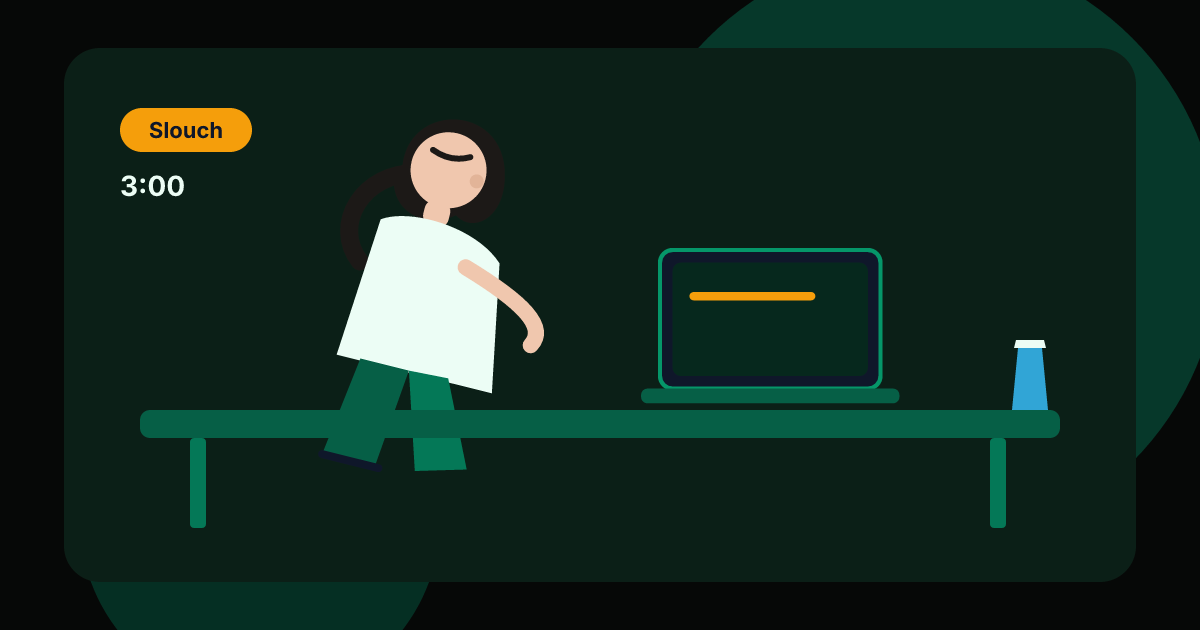
There is a moment, most workdays, when the words on the screen get a little fuzzy and your chair starts to win. For a lot of people that moment arrives around 3 PM. It can feel like your energy just walked out of the room.
Some of that is ordinary. Your body runs on a roughly 24-hour clock, called the circadian rhythm, which helps time sleep, alertness, and other daily patterns. The National Institute of General Medical Sciences explains that this clock is built into the body and does not stay perfectly flat through the day. A dip in the afternoon is common, even if you slept decently the night before.
That does not mean you are stuck with a slump. How you sit, how often you move, and how you slept can all change how hard that dip feels. The ideas below are general wellness tips. They may help. They do not diagnose or treat any condition. DeskZen is a wellness tool, not a medical device. If you feel unwell, or exhaustion is new or severe, please talk to a health professional.
The afternoon dip is real, and it is not a character flaw
It is easy to blame willpower. A more useful picture is that alertness naturally rises and falls. NIGMS describes circadian rhythms as the body's internal timing system, shaped by light and daily routines. When the afternoon arrives, many people feel a bit slower, even on a good sleep schedule.
Sleep still matters. The National Heart, Lung, and Blood Institute notes that not getting enough sleep can affect attention, mood, and how you function the next day. If you are running on a short night, the 3 PM wall may feel taller. Getting a more regular sleep window, when you can, may help more than another cup of coffee at 2:45.
A short walk or a glass of water will not replace sleep. They can still make the next hour kinder.
Sitting still may turn a dip into a slump
Now add a desk. By mid-afternoon you may have been sitting in roughly the same shape since lunch. Harvard Health's overview of the dangers of sitting describes how long stretches of sitting are a modern habit, and why breaking them up is worthwhile. You do not need to read that as a scare story. The practical takeaway is simple: your body is not built to hold one chair-shaped pose until quitting time.
When you slouch through that stretch, extra work often lands on your neck and lower back. Your chest folds inward. Breathing can feel a little shallower. None of this causes the 3 PM crash on its own, and no article should claim that sitting a certain way will fix fatigue. It is reasonable to say that a rounded, still posture may make an already sleepy stretch feel heavier.
OSHA's computer workstation guidance on work process encourages changes in position and reasonable breaks, not heroics at a keyboard. That advice fits the afternoon especially well.
A desk setup that asks less of you at 3 PM
You do not need new furniture to make the second half of the day easier. Check a few basics from OSHA's description of a neutral working position.
- Sit back so the chair supports you, instead of perching on the front edge.
- Keep your feet on the floor or a footrest.
- Raise the screen so you are not hanging your head over a laptop for the whole afternoon.
- Bring the keyboard and mouse in so your shoulders can drop.
If your laptop is low and close, you will drift toward it as your focus fades. Lifting the screen and using an external keyboard, even a cheap one, may help you stay stacked without thinking about it all day. Combined with a chair you can actually lean against, that small change often does more than a sticky note that says "sit up."
Movement snacks beat a heroic workout
When 3 PM hits, a hard workout is rarely what you want. Tiny movement snacks are more realistic.
- Stand up and roll your shoulders while a file saves or a meeting loads.
- Walk to refill your water, even if the kitchen is close.
- Look out a window and let your eyes focus farther away.
- Stretch your arms overhead and take three easy breaths.
- If you can, step outside for two minutes of daylight.
Outdoor light is one of the cues that helps keep circadian timing on track, something NIGMS discusses when it describes how daily rhythms stay aligned with the world around you. You do not have to train for a race. Standing, walking, and changing position count. OSHA likewise points to variation and breaks as part of a healthier computer work process. Think of them as part of the job, not a detour from it.
If you have been still since lunch, even one lap down the hallway may help you come back to your chair a little more awake than another scroll through your inbox.
A gentle nudge when you start to melt
Awareness is the missing piece. You can know all of this and still slump without noticing, especially when you are deep in a task and a little tired.
DeskZen watches your posture through your webcam, on your device, after you sit your best once to set your Zen. When you sink, it nudges you to sit tall. It can also remind you to take breaks. Your video never leaves your computer, and nothing is saved or uploaded.
Use it as a friendly tap, not a verdict on your character. Combined with a decent chair setup and a couple of real breaks, it may help you come through the afternoon a bit more upright and a bit less drained.
If pain shows up, or tiredness feels out of proportion, skip the internet advice and check in with a professional who can see you.
Sources
Keep reading
You may also like how to stop slouching at your desk, how to set stand-up and stretch reminders, or a posture reminder for Mac and Windows.
Try DeskZen free
Get a private nudge to sit tall and take a break when the afternoon slump hits. Your camera stays on your device.
Set my ZenNo sign-up. No credit card. About 30 seconds.
Sign in if you already have an account.
DeskZen is a wellness tool, not a medical device.