Webcam slouch detector vs a sit-up timer: what's the difference?
By Alok Paryani, Founder. Published
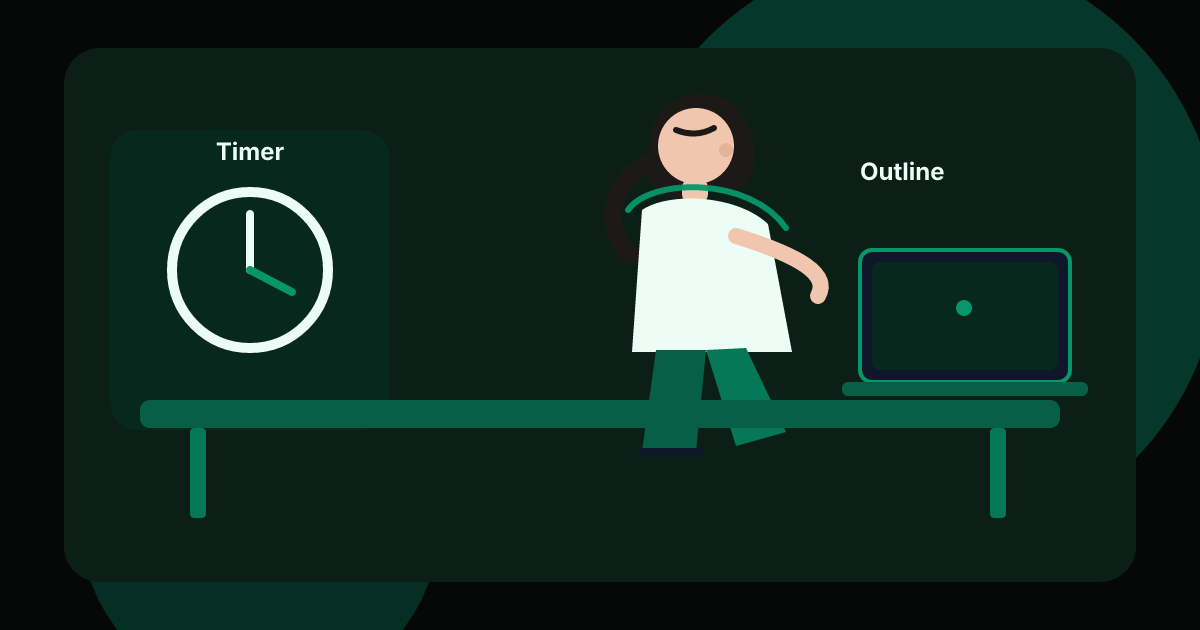
A sit up straight reminder can mean two very different things. One is a posture timer: a clock that rings every 20 or 30 minutes and hopes you will reset. The other is a slouch detector: a webcam check that stays quiet until your shape actually changes. Both can be useful. They are not interchangeable, and picking the wrong one is why a lot of reminders end up ignored by lunch.
DeskZen is a wellness tool, not a medical device. This guide may help you notice slouching sooner. It does not diagnose or treat anything. If something hurts, or a new ache keeps coming back, please talk with a health professional.
A posture timer rings whether you need it or not
A posture timer is a calendar with a beep. You choose an interval, often 20, 30, or 45 minutes, and it fires on that schedule. The strength is simplicity. You do not grant camera access. You do not think about lighting. You get a reliable tap that says, stand up, look away, or sit back in the chair.
The weakness is that the clock does not know what you are doing. It rings while you are already sitting tall, which trains you to dismiss it. It stays silent for the 19 minutes you spent folded toward the keyboard. Over a week, the sound becomes background noise. A reminder you swipe away without looking is not a reminder anymore.
Timers still earn a place. They are a good stand up reminder and a good stretch reminder, because movement is worth doing even when your posture is fine. Bodies like a change of position. A clock is honest about that job: it marks time, and it does not pretend to see you. The guide to stand-up and stretch reminders is the practical version of that routine.
A slouch detector waits until you actually drift
A slouch detector uses the webcam to compare you with a shape you chose. In DeskZen you sit your best once. That outline is your Zen, saved in the browser on this device. Then you work. When your head drifts toward the screen or your shoulders round away from that outline, a nudge shows up. If you are already close to the shape you set, it leaves you alone.
That is the whole difference. A sit up straight reminder that only rings on a clock is a timer. A sit up straight reminder that speaks up when you leave your own outline is a slouch detector. One answers "has it been 30 minutes?" The other answers "have I melted?"
The useful moment is the slow slide, not the dramatic collapse. Hips inch forward. The chest folds. The head follows the type. None of it feels like a decision, which is why you can spend an hour in a shape you would not have chosen at 9 AM. A detector is there for that gap. It helps you notice. It does not force a military pose, and it should not scold you.
In DeskZen, amber is reserved for that slouch cue so you can tell it apart from an ordinary break. The picture itself is not the product. The camera stays on your device. Photos and video are never saved or uploaded. The snapshot used for the check stays in memory only.
What to ask before you trust either one
You can sort most apps with four questions. The answers matter more than the marketing line on the home page.
- Does it look at you, or only at the clock?
- Does it stay quiet when you are already sitting the way you chose?
- Can you snooze it without guilt when you are in the middle of a sentence?
- If it uses a camera, does the video stay on the computer?
A timer that fails the first two questions can still be a fine break reminder. A camera app that fails the last question is not a private posture tool, no matter how gentle the copy sounds. If privacy is the reason you have avoided webcam tools, read how a private posture reminder handles the camera. The short version is the rule above: nothing from the camera is saved or sent.
The U.S. Occupational Safety and Health Administration describes a neutral working position for computer work: a supported back, feet on the floor or a footrest, relaxed shoulders, and a screen you are not craning toward. Harvard Health's overview of why posture matters is a calm place to read more about comfort through the day. Neither source says you need a perfect pose every second. They point at a setup you can sustain, and at changing position instead of freezing.
Use both, and give each one a job
Let the timer own movement, and let the slouch detector own the drift between alarms. DeskZen is built as that pair. The webcam check is the slouch detector. Separate reminders can invite you to move, stretch, rest your eyes, or drink water. You can mark one done or snooze it. Quiet hours keep the tips silent when you are on a call or in a deep block of work. The free webcam posture checker page walks through the camera side. The posture reminder for Mac and Windows explains the same browser tab on either computer, with nothing to install.
Put the camera near eye level, about an arm's length from the screen (roughly 20 to 28 inches). Set your Zen in a shape you can keep. A strained pose makes every normal breath look like a slouch.
Why the ignored beep is usually a design problem
People blame themselves when they mute a reminder. Most of the time the reminder was asking the wrong question. A chime on the half hour cannot tell a focused, well-supported hour from a folded one. A detector can fail the other way: if the camera cannot see you, or you set an outline you cannot maintain, the nudges feel random. Pause the camera, sit back, and set your Zen again. The outline lives in this browser.
You still need a desk that is not fighting you. A low laptop and a chair you perch on will beat any app. The guide on how to stop slouching at your desk covers chair height, screen height, and the small resets that matter more than a perfect pose. If afternoons are when you fold, why you crash at 3 PM looks at how a long, still sit can make that dip feel heavier.
A kind standard for the workday
The goal is not a scoreboard. Sit tall when the nudge arrives, or stand for a minute, then go back to the sentence you were writing. You are going to slouch. A posture timer can carry the breaks. A slouch detector can carry the moments in between. Skip any tool that shames you for being a person at a desk.
Sources
Questions
What is a slouch detector?
A slouch detector uses your webcam to help you notice when your posture drifts from the outline you set. It is a reminder, not a medical device, and it does not diagnose or treat anything.
How is a slouch detector different from a posture timer?
A posture timer rings on a clock, even if you are already sitting well. A slouch detector stays quiet until your shape actually changes, then gives you a nudge.
What does a sit up straight reminder do?
People use that phrase for both clocks and camera nudges. A useful sit up straight reminder tells you when you have left the posture you chose, instead of only beeping on a schedule.
Does the webcam slouch detector save video?
No. In DeskZen the camera stays on your device. Photos and video are never saved or uploaded. The snapshot stays in memory only.
Keep reading
Try DeskZen free
Sit your best once, then get a nudge when you actually slouch, not only when a clock says so. Your camera stays on your device.
Set my ZenNo sign-up. No credit card. About 30 seconds.
Sign in if you already have an account.
DeskZen is a wellness tool, not a medical device.